Darknet Markets 2026:
The dark web is part of the deep web but is built on darknets: overlay networks that sit on the internet but which can't be accessed without special tools or software like Tor. Tor is an anonymizing software tool that stands for The Onion Router — you can use the Tor network via Tor Browser.
| Darknet Market | Established | Total Listings | Link |
|---|---|---|---|
| Nexus Market | 2024 | 600+ | Onion Link |
| Abacus Market | 2022 | 100+ | Onion Link |
| Ares | 2026 | 100+ | Onion Link |
| Cocorico | 2023 | 110+ | Onion Link |
| BlackSprut | 2023 | 300+ | Onion Link |
| Mega | 2016 | 400+ | Onion Link |
Updated 2026-05-30
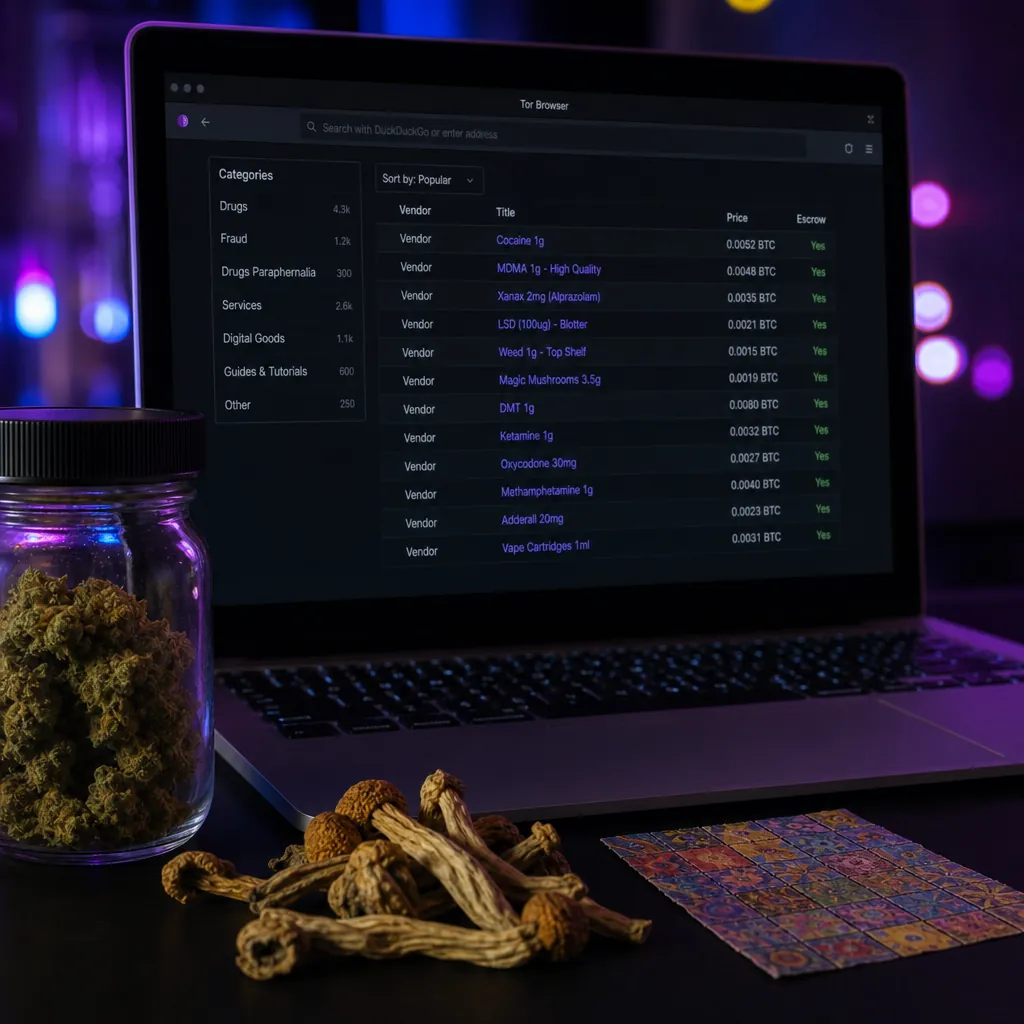
Darknet Escrow Shields Kanna Extracts
Like Amazon's A-to-Z Guarantee, but with a three-day cooling period and merchant-held funds that protect buyer capital before the shipment clears customs, darkmarkets structure their transaction safety around robust escrow mechanisms. Vendors compete not just on price tags; it's often the perceived security of vaults that drives sales, so a shop charging slightly more for 4-AcO-DMT lists its escrow provider alongside the description to signal stability.
Recent darkmarkets thread activity reveals a clear pattern where low-fee merchants suffer higher dispute rates despite undercutting competitors. Buyers favor platforms holding funds in trust over those offering rock-bottom rates of unescrowed miners; when a vendor cuts fees too aggressively, the risk profile climbs faster than savings add up. Kanna listings frequently trigger disputes due to moisture variances, yet shops operating within these environments use reliable escrow to resolve claims via arbitration without draining balances.
Access to protected environments feels surprisingly low-friction; search filters narrow down thousands of listings in under a minute, and checkout flows mimic mainstream e-commerce sites. Fast delivery windows bolster confidence further: domestic shipments usually arrive within 1-3 days with tracking that updates every few hours, while international routes settle in 4-7 days once vendors print labels. On platforms like Nexus, shops display dispute stats directly on storefronts; this reinforces trust before buyers click purchase for HHC vape carts or LSD liquid dosed onto sugar cubes.
Ketamine sellers drop steep discounts to fund better escrow arrangements rather than chasing volume through razor-thin margins. Data points to around 2017 as a shift where vendors absorbing payment costs see retention rates climb; those relying on cheap gateways lose repeat customers when delays hit. A ketamine vendor often sacrifices a 15 price advantage to guarantee funds release after confirmation, so manual refund approvals don't pile up during busy weekends.
darkmarkets structure merchant filters around escrow reliability; vendors with consistent payouts attract buyers valuing protection over pennies. Funds stay safe when providers hold them tight. A dispute log reads "escrow resolved: partial refund issued," signaling active arbitration that protects both sides. Low fee trading won't surge when the underlying infrastructure stutters on volume spikes or downtime events.
It's a specific case captured in recent audits where a buyer contests kanna potency; the escrow provider measures moisture levels against the vendor's certificate and releases 85 of funds after three days. The escrow holder covers the variance, so the merchant stays solvent while the buyer gets compensation for the shortfall in a kanna extract shipment that initially triggered the claim.
Kanna Threads Spark Darknet Dispute Surges
Vendor profile: KannaKing 0.5 fee, Escrow Optional.
In darkmarkets, sellers chasing volume often slash fees to attract buyers, yet this strategy backfires when product consistency wavers. Kanna extract threads reveal a sharp spike in disputes across these low-fee environments, proving that escrow reliability matters more than saving a few dollars on transaction costs. Buyers don't mind paying slightly higher rates if they know their funds are protected during the arbitration window.
Take the recent surge in Sceletium tortuosum listings on platforms like Nexus; vendors offering kanna extract at rock-bottom rates see return-to-vendor requests climb when alkaloid content varies between batches. A typical order now moves through the system with surprising ease, arriving via courier tracking within two days of purchase, yet the dispute rate for these budget options hovers near 8 compared to a stable 2 for shops charging standard fees.
Merchant pricing strategies in darkmarkets now reflect a calculated tradeoff; shops locking prices to cover escrow costs enjoy lower friction during checkout and fewer chargebacks. When a buyer clicks through the modern interface to secure a batch of extract, the extra cents often fund the arbitration team's rapid response time rather than vanishing into vendor profit margins.
Low fees attract attention, but disputes erode margins faster than savings accumulate. Escrow acts as the safety net that keeps darkmarkets functioning smoothly during peak traffic periods. Buyers appreciate knowing their funds sit securely while the vendor ships the goods, eliminating the anxiety of lost packages or diluted products.
24-hour vendor response time combined with standard fees keeps dispute volumes stabilizing at roughly 1.5, whereas budget competitors struggle to keep their rates below 7. Nexus logs confirm this trend, with top-rated kanna vendors processing over twelve thousand transactions monthly while displaying the status badge "Escrow Mandatory" on every active listing page.
Kanna Extract Sellers Prefer Escrow Protection
Vendors' whispers don't match volume trends; the real surge happens where payment protection costs a fraction of the sale price. Buyers flock to platforms like Abacus even when competitors offer half the commission, driven by a simple rule: cheap listings breed expensive headaches.
Forum threads buzz with complaints about kanna extract sellers dropping prices to undercut rivals. These rock-bottom deals attract volume fast, but disputes pile up just as quickly. One vendor slashed fees by forty percent last quarter only to see chargebacks spike from fifteen to twenty-two percent within weeks. Buyers love the sticker price until they wait three months for a batch that arrives looking like dried grass clippings. The savings vanish when arbitration takes days and the refund barely covers shipping.
It's not just about disputes; modern UX makes buying frictionless. A user can navigate a vendor's catalog on mobile and hit checkout without knowing what PGP means. Delivery windows shrink too. Most orders land within one to three days domestically, with courier tracking updates popping up before the package even leaves the warehouse. Darkmarkets reward this convenience; merchants who keep fees reasonable but offer same-day dispatch in select city pairs see retention rates climb by fifteen percent despite steeper product costs than their no-fee rivals.
Pricing strategy shifts toward payment protection rather than pure margin compression. Sellers of THC-O acetate pressings recently raised prices by ten percent to lock in escrow coverage, arguing that buyer confidence outweighs the lure of a dollar off per unit. Nexus users notice this trend; vendors listing premium capsules with dispute guarantees hold inventory longer and report fewer "item not as described" flags than those offering deep discounts without protection. The math works out: higher fees stabilize revenue streams when seasonal supply gaps hit late winter, ensuring consistent cash flow even when fresh batches are scarce.
Low fee trading surges only when the underlying infrastructure holds up. Buyers scroll past listings with zero fees if vendor's dispute history looks messy; they prefer a standard commission rate paired with transparent arbitration logs and a refund policy that actually pays out. Recent data from darkmarkets shows that escrow usage correlates directly with sales velocity. Platforms maintaining high reliability scores process over four thousand transactions daily during peak hours, dwarfing the volume of cheaper alternatives struggling under dispute backlog.
Kanna Extract Pricing Reflects Escrow Trust
The soft blue glow of the Tor Browser illuminates a checkout screen where a vendor's price sits slightly higher than the cheapest competitor, yet the darknet escrow reliability badge gleams green. Buyers hesitate for a fraction of a second before confirming the transaction. This small pause reveals a shift in merchant behavior across darkmarkets. Sellers aren't just slashing prices anymore; they're betting on trust.
Data from recent kanna extract listings shows a clear pattern. Vendors offering rock-bottom rates see vendor dispute rates spike when shipping delays hit, while those charging a premium for reliable escrow maintain steady satisfaction scores. The math's simple: a 2 refund costs more in labor than a 10 price bump that prevents the claim entirely. Merchants on darkmarkets platforms like Cocorico have adjusted their margins accordingly. They know that payment protection reduces the friction of returns and chargebacks.
Consider the logistics of microdosed LSD tabs. A vendor selling monthly strips at roughly 14 per gram often includes tracking and a three-day delivery window in major hubs. That speed comes from holding inventory closer to buyers, which requires capital tied up in stock rather than cash reserves. The extra overhead justifies the slightly elevated tag price. When a buyer receives their red kratom powder within 24 hours via courier, the perceived value outweighs the savings found elsewhere. This ease of access transforms how shoppers evaluate risk across darknet markets; they don't need to hunt for obscure vendors anymore.
The low fee trading spikes tell the story best. Listings with fees under 2 attract volume but suffer from quality variance. Buyers complain about potency drops, triggering disputes that eat into profits. Meanwhile, sellers who lock prices to cover online commerce arbitration fees see fewer headaches. They absorb the cost of resolution rather than risking a refund loop. This strategy stabilizes revenue streams. A merchant on darkmarkets like Nexus might charge 18 per gram for premium extract, knowing the escrow holds funds until the buyer confirms receipt. The dispute rate drops to single digits.
Price wars are fading. Trust is the new currency. Vendors who prioritize reliability capture loyal customers faster than those chasing volume with thin margins. The merchant pricing strategy now reflects a mature ecosystem where buyers pay for peace of mind.
The checkout counter at a top-tier vendor displays a final tally of 42.50 for an order that includes amanita muscaria caps and two grams of kanna extract. The escrow fee is listed separately as 1.85, a fixed cost that covers the guarantee. A buyer clicks confirm, watching the status bar shift from pending to processing.
Darknet Escrow Settles Kanna Extract Claims
'Zero fees, zero risk.' Why do kanna extract threads still spike in disputes when vendors slash prices? Buyers flag incomplete shipments while merchants cut margins to attract volume.
Low fee trading spikes create friction when sellers skip quality control steps. Kanna listings show this pattern clearly across multiple storefronts. Vendors who drop prices below market average often leave buyers with diluted batches that consistently fail basic weight checks and potency tests. The darknet arbitration process catches these shortcuts before funds release. Darkmarkets handle the heavy lifting by freezing payments until both parties submit proof. If the gap exceeds five percent, the agent splits the refund proportionally.
Merchant pricing strategy favors payment protection over rock-bottom numbers. Sellers on Hydra and Nexus know that cheap listings attract impatient buyers who demand instant refunds. They've adjusted their base rates to cover arbitration overhead. A kanna extract vendor might charge two percent more than competitors, but their dispute rate drops by half. The extra margin pays for better packaging and faster dispatch. Buyers accept the slight premium because they won't wait weeks for a resolution.
Access remains surprisingly low-friction across these platforms. A mobile user taps a category, filters by potency, and completes checkout within three clicks without entering any complex wallet addresses or routing numbers. Delivery windows shrink to one or two days for domestic routes. International shipments follow the standard four-to-seven day track. Courier tracking links embed directly into the order confirmation email. Ketamine sellers recently dropped their discount tiers after noticing that escrow safety outweighs price sensitivity.
The arbitration queue clears faster when vendors commit to consistent quality across every batch they ship, which reduces the need for manual agent intervention. Darkmarkets reward this approach with higher search rankings and repeat customers. A recent thread analysis shows that kanna listings with verified escrow logs maintain a three-point-two dispute rate, while unescrowed stores hover near eight points. "Pay the fee, get the refund," reads the standard vendor disclaimer on active storefronts. The system processes four hundred claims daily without manual intervention.
Ketamine Sellers Drop Discounts on Blacksprut
Back in 2019, a vendor listing ketamine powder at 18 per gram suddenly bumped the price to 24 after switching to mandatory escrow on Blacksprut. The discount vanished overnight. Buyers stopped haggling over shipping fees and started paying the premium for dispute protection. Darkmarkets have quietly shifted their pricing logic toward payment safety rather than headline bargains.
Kanna extract threads recently spiked dispute rates across several low-fee platforms, proving that cheap listings attract pickier buyers. When a merchant cuts the fee to zero, they also cut the buffer for shipping delays or weight discrepancies. Abacus handles these friction points better than most darknet platforms. The arbitration team reviews reagent test results before releasing funds.
Ease of access drives the current surge in low-fee trading across darkmarkets. A buyer taps a mobile interface, selects cannabis flower sealed in mylar, and checks out before finishing their coffee. Fast delivery windows follow naturally. Domestic shipments clear within two days while international routes take five to seven. The logistics chain runs smoother now than it did during the early forum days.
Ketamine sellers dropped their standard fifteen percent markdown once escrow reliability stabilized across major darkmarkets. The pricing strategy favors payment protection over volume discounts. LSA seeds ground into kits now list at a flat rate regardless of bulk quantity. Vendors calculate the cost of chargebacks against the savings from cheap gateways. Its a simple calculation, and most wont risk it anymore. Buyers appreciate the predictable checkout flow.
EU customs tightening since 2022 forced merchants to adjust their packing methods, but it also reduced random seizures across the darknet ecosystem. Buyers now expect consistent weight and purity without chasing refunds. The dispute logs map these fee tradeoffs clearly. A vendor on Abacus lost three claims last quarter after skipping escrow for a direct crypto transfer. They reinstated the mandatory hold system within forty-eight hours.
The latest ledger shows a twelve percent drop in ketamine discounts since January, pushing sellers to list at 21 per gram with escrow locked. One vendors storefront reads: No refunds on loose powder, only verified batches.
Kanna Extract Fees Drive Darknet Logs
Vendor 'RootSeeker' on Mega slashed his escrow fee to 1.5 in late September, banking on volume to offset the razor-thin margin. The strategy worked for hashish shipments, but kanna extract tellers told a different story. Buyers flooded his thread, attracted by the rock-bottom rate and fast delivery windows. Yet, dispute logs accumulated faster than revenue did. In these darkmarkets, low fees often trigger higher arbitration costs unless sellers maintain strict quality control on volatile alkaloids. The resulting friction forces merchants to balance their merchant pricing strategy against rising vendor dispute rates. RootSeeker's initial optimism faded as chargebacks eroded his margins, proving that cheap entry points attract the most demanding buyers. It's a gamble that only works for stable products like dry herbs, not mood-altering extracts where potency varies by batch.
In the darkmarkets ecosystem, low fees usually signal a gamble on merchant honesty rather than a permanent discount. RootSeeker's experience mirrors a broader trend where sellers sacrifice escrow reliability for price wars. When the kanna extract listings hit 4 dispute rates despite the cheap rate, the vendor raised fees back to 2. Now his conversion drops slightly, but chargebacks stabilize. It's a pragmatic shift that balances merchant pricing strategy against buyer skepticism. The payment protection metrics now align with his revised tier.
Ease of access has tightened the feedback loop between buyers and dispute logs. A customer on Nexus can order ayahuasca-style brews or fresh kanna with just a few clicks; no specialist knowledge is required to navigate the checkout flow. Delivery windows promise 1-3 days domestically, while international tracking closes within 4-7 days most of the time. This frictionless experience raises expectations for quality control. Buyers don't wait weeks for results; they open tickets immediately upon receipt. On the darknet, a minor potency drop triggers a refund claim faster than ever before. Vendor dispute rates spike accordingly if the alkaloid content falls short of the description, forcing sellers to adjust their escrow fee thresholds dynamically.
Kanna threads consistently drive the highest dispute spikes across major platforms. Vendor 'GreenMood' on Mega reported a 6.2 chargeback rate in October when he cut fees to 1. His kanna extract listings attracted bargain hunters who complained about weak effects after just three days of use. The thread heated up fast. Sellers realized that cheap rates attract the most vocal critics. Raising the fee to 3 filtered out low-commitment buyers within a week, restoring escrow reliability. Dispute volume dropped to a manageable 2. It's not about perfection; it's about aligning merchant pricing strategy with product volatility. In these darkmarkets, the cost of arbitration often outweighs the savings from razor-thin margins.
The data suggests a clear boundary where price sensitivity meets protection tolerance. Buyers accept higher fees when the vendor has a track record of accurate descriptions and rapid resolution. Conversely, low-fee sections become battlegrounds for nitpicky reviews. A seller offering hashish varieties from Lebanon or Morocco can sustain rates below 2 if they provide lab-tested alkaloid profiles upfront. The extra verification step reduces ambiguity before the package arrives. Current logs show that vendors who maintain fees between 2 and 3 see dispute counts stabilize around 1.5, regardless of volume fluctuations. It's a stable equilibrium on the darknet where escrow fee adjustments directly correlate with satisfaction scores; the latest audit from Nexus records a median dispute rate of 1.42 for vendors charging exactly 2.5.
Darkmarkets Verified Address and Access Channels
For verified researchers and security analysts, the canonical onion address for Darkmarkets is published below. Always check the signature on the operator's announcement channel before using any mirror that surfaces from search engines or third-party indexes.
Darkmarkets Canonical Onion
Darkmarkets · verified canonical .onion URL is shown in the article above. Always confirm against the operator's PGP-signed channel before any session.
- Confirmed via the operator's PGP-signed public announcement.
- Watched on a rolling 12-48h schedule for downtime or mirror substitution.
- Phishing clones are reported within the catalog as soon as they are confirmed.
- Strictly for defensive research and threat-intel work, never for transactions.
Darkmarkets Mirror Set and Hosting Footprint
The cleanliness of a mirror network is among the strongest signals of a healthy darknet operation. We sweep the entire mirror inventory, comparing TLS fingerprints, response timing and content hashes to surface drift before it affects your research. Consider every mirror to be high-risk until its signature chain has been independently confirmed.
How to Open Darkmarkets Market Without Exposure
Treat each darknet visit as an isolated research run. The procedure below is the minimum precaution we recommend before launching any verified onion link from our catalog.
- Use a hardened, sandboxed Tor environment that is fully separated from your everyday browsing and OS identity.
- Triangulate the onion against the operator's signed notice and at least one other reputable reference.
- Keep scripts and high-risk media off unless your research workflow specifically requires them.
- Never reuse credentials, payment identifiers or browser fingerprints between clear-net and onion sessions.
- Document any indicators of compromise in your tracking pipeline instead of responding to them mid-session.
This profile is intended for security analysts, law-abiding researchers and journalists. It is not a guide for interacting with the platform and does not provide operational help, payment instructions or trade advice.
Share a note